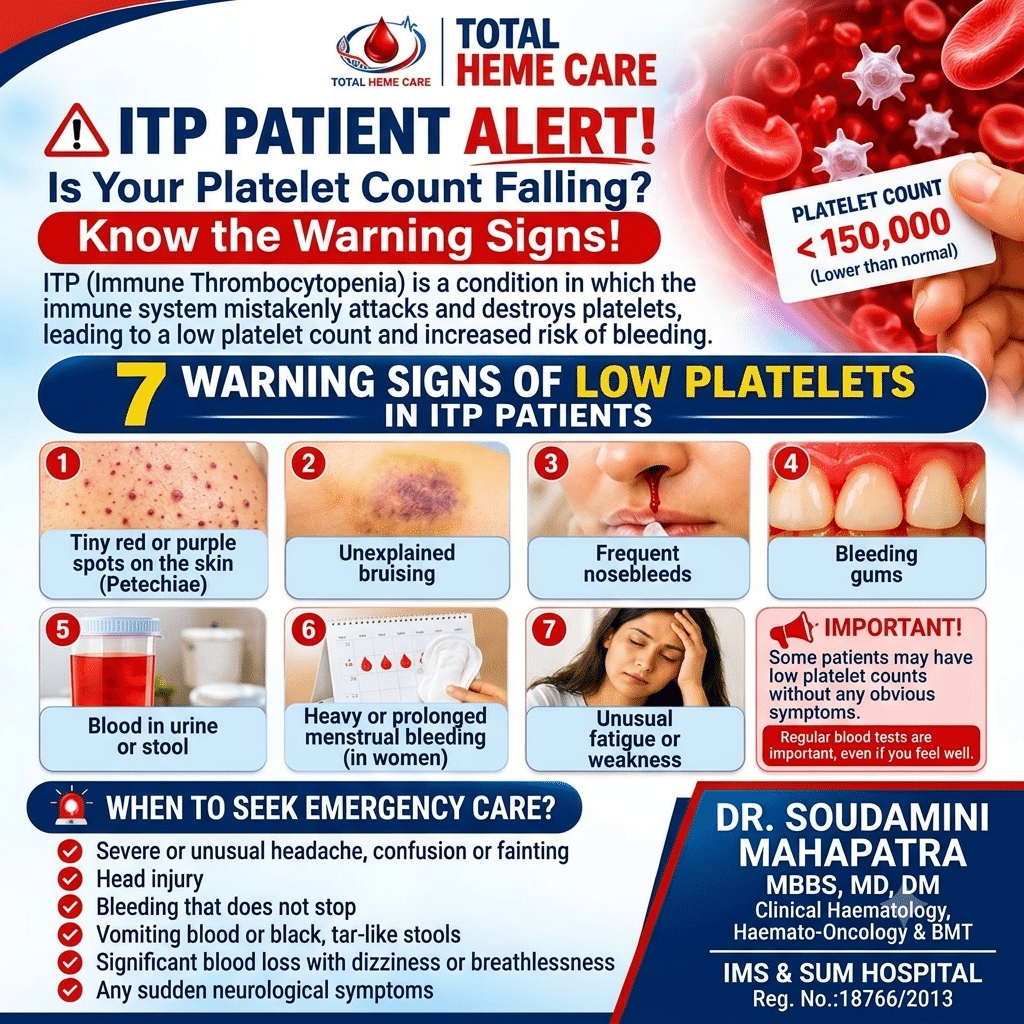
If you live with Immune Thrombocytopenia (ITP), tracking your platelet levels and recognizing subtle physical changes are vital to staying safe.
Platelets are tiny, disc-shaped blood cells responsible for clotting and preventing excessive bleeding. When platelet levels plummet, your vulnerability to bruising and hemorrhaging rises sharply. However, ITP can be deceptive: a critically low platelet count does not always produce obvious symptoms.
Understanding warning signals, keeping routine laboratory appointments, and maintaining close contact with your hematologist are key to preventing serious complications.
What Is Immune Thrombocytopenia (ITP)?
Immune Thrombocytopenia is an autoimmune hematologic disorder where the body’s immune system mistakenly targets and destroys its own platelets. In many individuals, the bone marrow’s ability to produce new platelets is also suppressed.
ITP presents in two primary forms:
-
Acute ITP: Short-term, often resolving within six months (more common in children following viral infections).
-
Chronic ITP: Persisting for 12 months or longer, requiring long-term monitoring and individualized management strategies.
Whether you require active therapy depends on your exact platelet count, clinical bleeding symptoms, age, and individual risk profile.
7 Warning Signs Your Platelets May Be Dropping
A sudden or gradual decrease in circulating platelets often manifests through specific skin and mucosal signs. Report any of the following to your healthcare team:
1. Petechiae (Pinpoint Red or Purple Spots)
Tiny, flat, reddish or purplish spots on the skin—most commonly clustered around the lower legs, ankles, or feet—are called petechiae. They occur when microscopic capillaries leak blood into the skin. Unlike allergic rashes, petechiae do not blanch (fade) when pressed.
2. Unexplained or Excessive Bruising (Purpura)
Waking up with large, spreading bruises without a clear history of physical trauma is a hallmark indicator of low platelets. These dark purple, blue, or brownish patches (purpura) warrant immediate clinical evaluation if they multiply or expand rapidly.
3. Frequent or Prolonged Nosebleeds (Epistaxis)
While dry weather can cause minor nosebleeds, frequent episodes or bleeding that requires extended pressure (more than 10–15 minutes) to clot often points to an underlying clotting deficit.
4. Bleeding Gums
Spontaneous gum bleeding, or persistent bleeding after gentle brushing or flossing, can signal mucosal bleeding linked to declining platelet counts.
5. Blood in Stool or Urine
-
Hematuria: Urine appearing pink, red, or tea-colored.
-
Gastrointestinal bleeding: Bowel movements that are visibly bloody, maroon, or dark black and tar-like (melena).
-
Action: Both symptoms represent internal mucosal bleeding and require prompt medical investigation.
6. Abnormally Heavy or Prolonged Menstrual Bleeding (Menorrhagia)
Women with ITP may observe periods that last significantly longer than normal, passing unusually large clots, or needing to change pads/tampons every 1–2 hours. Left unaddressed, this level of blood loss quickly triggers iron-deficiency anemia.
7. Profound Fatigue and Weakness
Persistent exhaustion that does not improve with sleep is a frequent, under-recognized symptom of ITP. It can stem from ongoing low-grade blood loss (anemia), immune dysregulation, or systemic inflammation.
Can Platelets Drop Without Any Symptoms?
Yes. Many individuals with ITP show zero external symptoms even when their platelet count falls below 30,000/µL (normal range is 150,000–450,000/µL).
Because your physical sensation cannot measure your true clotting capacity, you cannot rely on “feeling fine” as confirmation of a stable count. Regular Complete Blood Count (CBC) tests scheduled by your hematologist are the only reliable way to catch a silent drop before bleeding begins.
Red-Flag Symptoms: When to Seek Immediate Emergency Care
Internal bleeding or central nervous system hemorrhages are rare but life-threatening medical emergencies. Call emergency services or go to the nearest trauma center immediately if you experience:
-
Any direct head trauma, blow to the head, or concussion.
-
A sudden, severe (“thunderclap”) headache, confusion, blurred vision, or speech difficulty.
-
Weakness, numbness, or loss of motor function on one side of the body.
-
Uncontrolled bleeding from any site that does not stop after continuous direct pressure.
-
Vomiting bright red blood or substance resembling dark coffee grounds.
-
Severe dizziness, fainting, or sudden collapse accompanied by pale, clammy skin.
Action Plan: What to Do If Your Count Is Dropping
If a routine CBC reveals a downward trend:
-
Notify Your Hematologist: Do not wait for symptoms to worsen. Treatment thresholds differ from person to person.
-
Review Your Medication Cabinet: Avoid over-the-counter NSAIDs (aspirin, ibuprofen, naproxen) and blood thinners unless strictly prescribed and monitored by your physician, as these impair platelet function.
-
Minimize Trauma Risks: Suspend contact sports, heavy weightlifting, and high-fall-risk activities until your count stabilizes. Switch to a soft-bristled toothbrush and an electric razor.
-
Log Your Symptoms: Maintain a symptom diary tracking new bruises, petechiae spread, or minor bleeding events alongside your laboratory dates.
Clinical Treatment Approaches for ITP
Treatment is rarely “one size fits all.” It is determined by balancing bleeding risk against medication side effects:
-
Watchful Waiting (Observation): Often appropriate if counts remain safely above bleeding thresholds without active hemorrhagic signs.
-
Corticosteroids (e.g., Prednisone, Dexamethasone): First-line therapy designed to rapidly blunt immune-mediated platelet destruction.
-
Intravenous Immunoglobulin (IVIG): Delivers a temporary spike in platelet counts within 24–48 hours, often used before surgery or in emergency bleeding.
-
Thrombopoietin Receptor Agonists (TPO-RAs): Medications (such as eltrombopag, romiplostim, or avatrombopag) that stimulate the bone marrow to manufacture more platelets.
-
Targeted Immunosuppressants & Procedures: Monoclonal antibodies (e.g., rituximab) or surgical splenectomy for chronic, refractory cases.
Lifestyle & Safety Measures
While lifestyle adjustments cannot cure autoimmune disease, they reduce your risk of preventable trauma:
-
Gentle Dental Hygiene: Use ultra-soft toothbrushes and avoid aggressive flossing when counts are low.
-
Wear Protective Footwear: Keep shoes or sturdy slippers on indoors to prevent accidental toe and foot injuries.
-
Avoid Unverified Supplements: Do not consume herbal “platelet boosters,” papaya leaf extracts, or high-dose vitamin complexes without explicit hematologist approval, as some can interfere with clotting or interact with prescription therapies.
-
Carry a Medical ID: Keep an emergency medical card in your wallet indicating that you have Immune Thrombocytopenia.
Medical Disclaimer: This article is provided for educational and awareness purposes only and should not replace professional medical advice, clinical diagnosis, or personalized treatment plans. Always consult your hematologist or healthcare provider regarding changes in your platelet count or treatment decisions.